International expansion and exports to South Korea
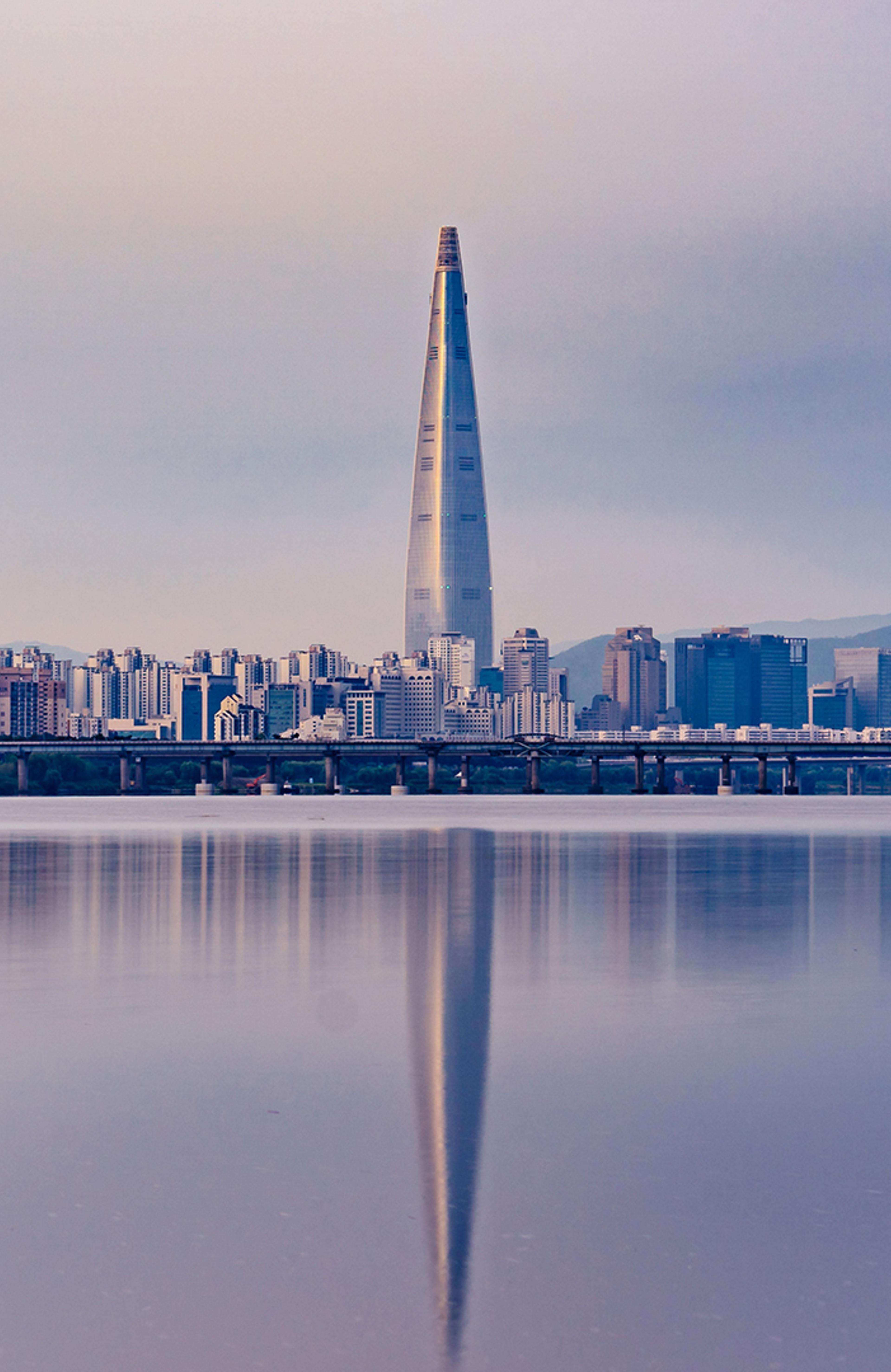
South Korea as a market
Through EFTA, Norway has a free trade agreement with South Korea.
Entering the South Korean market can be challenging, as it is dominated by a handful of family-owned companies. To succeed, you need to build strong business relationships, which may require regular visits to the country and contact with a local representative.
South Korea is one of the world's leading investors in business development and research and ranks fifth in the World Bank's 'Ease of Doing Business Index'. As a result, South Korea has become an economic and technological frontrunner in just a few decades.
Opportunities for Norwegian companies in South Korea
Offshore wind
South Korea aims to generate 20 per cent of its energy from renewable sources by 2030 under its ‘3020 Plan’. Offshore wind is central to this initiative, and the government plans to add a further 13 gigawatts of capacity to the current 1.58 gigawatts. Several major projects are in their early stages. A number of Norwegian companies are already involved in a 6-gigawatt megaproject off Ulsan, while several projects are under development on Jeju Island, most with a capacity of around 100 megawatts. This investment in offshore wind is creating demand for marine observation systems, offshore foundations, mooring systems, turbine and cable installation, advisory and digital solutions. Norway and South Korea are engaged in a broad partnership dialogue to position Norwegian companies to seize these market opportunities.
Smart cities
Over the past 15 years, the Korean authorities have used new technologies to address urban challenges such as high population density. While this helped solve some of the challenges associated with urbanisation, it was not enough, as the projects were largely technology-driven. Since then, the Korean authorities have promoted sustainable, people-centred urban development under the banner of 'SmartCity' or 'K-SmartCity'. K-SmartCity offers opportunities for Norwegian companies to provide solutions for smart transport, smart energy and power grids, smart buildings, smart hospitals and smart governance.
Maritime and hydrogen
Following a significant decline in revenue in the Korean shipping industry, the Korean authorities have drawn up a five-year plan to rebuild the sector. The plan focuses on the maritime industry ecosystem, including shipbuilding, ports, imports and exports, and shipping finance. It has three key objectives: (a) to secure stable cargo volumes through cooperation between Korean shipping companies and freight forwarders, (b) to promote competitive and highly efficient shipbuilding, and (c) to support stable management in Korean shipping companies. Hydrogen and LNG are key elements of this plan.
Seafood
Dried seafood accounts for a large share of seafood consumption in Korea. Koreans enjoy drying seafood such as finfish, squid, octopus and seaweed. Dried Alaska pollock, for example, is one of the most popular types of dried fish and is similar in many ways to Norwegian stockfish. Given the popularity of dried seafood, online and other retailers are keen to introduce fish snacks to the market. One popular fish snack is shredded dried pollock with a sticky, spicy sauce.
Tourism
Norway has become increasingly popular with South Koreans in recent years. Flight connections between our two countries continue to improve, and many South Korean tour operators include Norwegian tourism products in their itineraries. The number of South Koreans visiting Norway has risen sharply over the past ten years. In 2017, visitors from South Korea generated around 120,540 overnight stays in Norway, an increase of 197 per cent compared with 2007. Read more about tourism market insights from Visit Norway.
Innovation Norway, Royal Norwegian Embassy,
13th Floor, Jeongdong building,
15-5 Jeong-dong, Jung-gu
100-784 Seoul
Tel: +82 2 727 7100
Fax: +82 2 2096 2970

